Guest: Nicholas Grossman, international relations, national security expert; Also: Another huge election night for Dems in WI, GA...
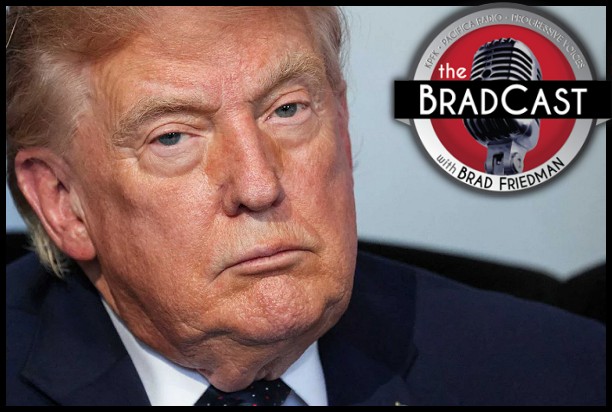
We pick up today where we left off at the tail end of The BradCast yesterday, as the President of the United States proved once again to the world to be a desperate paper tiger. Turns out (but you knew this), he's also a lousy negotiator and an absurdly incompetent Commander-in-Chief. [Audio link to full show follows this summary.]
Before we get back to the war today, and it's apparent lack of ceasefire(?), some excellent news for small "d" democracy and for Democrats alike here in the Homeland.
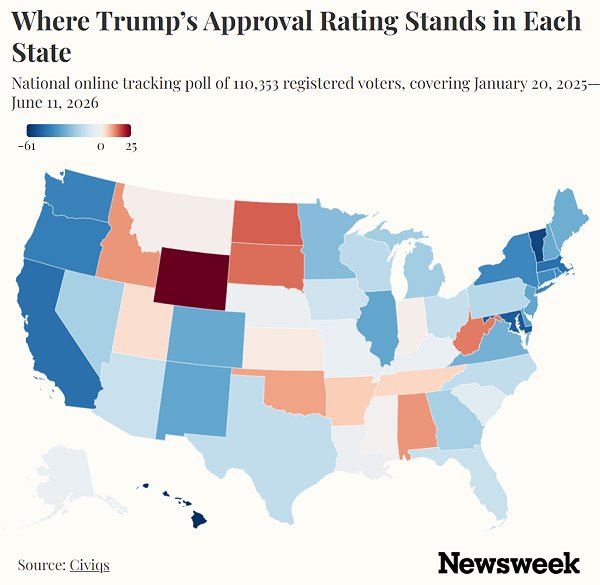
Democrat Shawn Harris lost his special election for the U.S. House on Tuesday in Georgia's very "red" 14th Congressional District to Trump-endorsed Clay Fuller by 12 points. Sounds like a landslide! But the GOP victory in the House District previously held by far-right Marjorie Taylor Greene masks a remarkable move toward the Democrats in the most Republican District in the battleground state. In fact, Harris' loss --- a stunning 25-point swing toward the Democratic candidate as compared to Trump's 2024 win in the district --- helps obscure the fact that it was "the most significant overperformance the [Democratic] party has seen across all seven House special elections" since Trump's return to power last year.
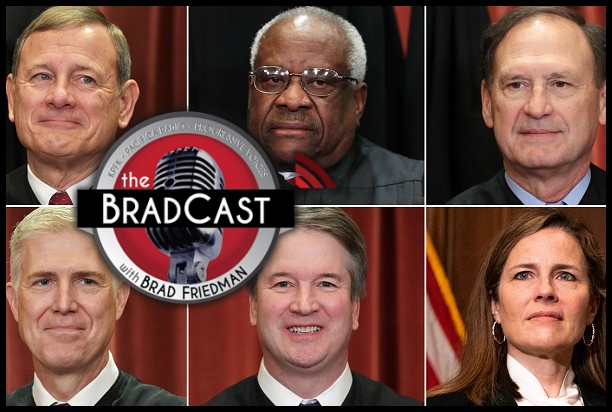
Also on Tuesday, Chris Taylor, a liberal, Democratic-supported state judge in Wisconsin, won this year's election for the state Supreme Court by some 20 points, expanding the court's liberal majority to 5 to 2. The margin was extraordinary by any measure, but especially considering the incredibly narrow races for the state high court over much of the past two decades in another battleground state. Not to mention the ironclad majority that Republican-supported Justices previously enjoyed there for so long. No longer, thanks to persistent Democratic leadership in the state and indefatigable voter turnout to reverse the previously dark fortunes of Badger Staters.
It wasn't only those two marquee races on Tuesday where voters registered displeasure with Republicans ahead of this year's critical midterms. Rightwingers were removed from school boards in local elections in a number of states, from Wisconsin to Oklahoma to Missouri!
THEN... It's back to the political front lines in the Middle East, where the tenuous ceasefire Donald Trump proved desperate to claim on Tuesday night --- under terms that wildly appear to favor Iran --- seemed to be falling apart all day on Wednesday. The terms of the deal remain unclear, at best, with both sides reporting different understandings. We try our best to make sense of it all today.


But the bottom line for now is that, even under the most generous interpretation, Trump seems not to have been taken to the cleaners as much as having driven there himself.
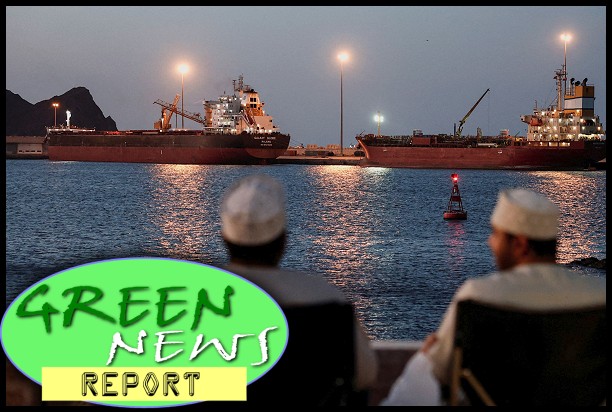
Iran is already insisting that the U.S. has violated the agreement, and says it will not open up the Strait of Hormuz, even as the Trump Administration was claiming that it was open and declaring "victory" on Wednesday, as the stock market appeared to play along for the day.
But even by my best understanding of the terms of the ceasefire negotiations, it appears that Iran will end up with much much more than they had before Trump decided to start a war with them, and the U.S. will have much less than they started with. By way of comparison to what the U.S. had before Trump tore up the Obama-era nuclear agreement with Iran, the entire world will also have much less than before the great deal maker destroyed the delicate power balances in the Middle East faster than he was able bankrupt an Atlantic City casino.
We're joined today to help us make sense out of the chaos by the incredibly knowledgeable and clear-spoken NICOLAS GROSSMAN, International Relations professor and national security expert at the University of Illinois. Last week he argued at his Arc Digital newsletter and at MS NOW that there was "No Off Ramp in Sight".
So, do we now have an off ramp after all? Probably not, argues Grossman. "This problem is really not going away," he says. "Already the war itself has disrupted a lot of global energy supplies. Iran is still choking traffic through the Strait of Hormuz. If they are charging, they will get a ton of revenue for this. All of that is ongoing, and all of that continues to be America's problem. Because it will affect the global economy, the American economy, make the prices of everything higher, and we should probably expect more of that."
"To the extent that Trump took an off-ramp, it was basically by surrendering," asserts Grossman, who argues that, "if we go by what the Pakistani mediators say the US had agreed to, it would be almost a total American surrender, giving Iranians everything they want, getting nothing the US wanted, and leaving the United States in a decently weaker geostrategic position than before the war started."
We cover a lot of territory with Grossman today, including how crippling sanctions against Iran have now been lifted and how they now not only control the Strait, but may be allowed to charge $2 million a pop for passage --- none of which they had prior to the war. All as part of an agreement which currently says nothing at all about restrictions on their missile, drone, or even nuclear programs.
Grossman makes a lot of excellent points. But one, I think, is worth putting up front here: that toll being placed by Iran on ships going in and out of the Strait. If that is allowed to become the practice, "it would amount to something like $100 billion a year" for Iran, he explains. That is an amount larger than their current annual government budget.
"If we think back to the Obama nuclear deal," Grossman continues, which "did actually restrict Iran's nuclear program," Trump and Republicans have spent years accusing Obama of "sending 'pallets of cash' to the Iranians." The cash that was sent, as part of the careful agreements, was actually Iranian funds they had spent for airplane parts prior to the 1979 revolution, for parts they never received. It was their money. In any event, as Grossman notes, "that total value was $1.7 billion, and it was returning frozen funds, returning Iran's own money to them. One payment of $1.7 billion is a lot less than $100 billion every year," as Trump's ceasefire agreement would appear to allow the Iranians to collect in order to reopen transnational shipping of a fifth of the world's oil and natural gas supply.
The art of the deal.
Tune in for much more today...
CLICK TO LISTEN OR DOWNLOAD SHOW!...
* * *While we post The BradCast
here every day, and you can hear it across all of our great affiliate stations and websites, to automagically get new episodes as soon as they're available sent right to your computer or personal device, subscribe for free at iTunes, Pandora, TuneIn, iHeart, Amazon or our native RSS feed!
* * *