Guest: Political scientist David Faris of Roosevelt Univ; Also: More Special Election wins for Dems in deep 'red' MAGA territory; Voting probs in TX...

Donald Trump's disastrous War on Iran continues to wreak global havoc on today's BradCast, with no apparent end in sight. Though election news from Tuesday continues to offer at least a ray of hope. [Audio link to full story follows this summary.]
FIRST UP TODAY... the election news. Mississippi held its statewide midterm primary elections on Tuesday with no real surprises. The more interesting news comes out of two Special Elections in other states yesterday.


In Georgia's very MAGA 14th Congressional District, the Special Election primary to fill the seat left vacant by Marjorie Taylor Greene's January retirement following her split with Trump, offered some tantalizing results. It was a 14-person "jungle primary", with all candidates from all parties running for the top two slots. If nobody wins more than 50%, those two go on to the Special runoff on April 7.
On Tuesday night, Democratic candidate Shawn Harris, a cattle farmer and retired brigadier general, reportedly came out on top of the field with a bit more than 37% of the vote. Trump-endorsed Clayton Fuller came in with just under 35%, though he was largely battling fellow MAGA candidate Colton Moore, who took just over 11%. So the Republican front-runner had some actual competition from his own team, whereas Harris largely got a free ride, at least from Dems, to next month's runoff. Interestingly, however, Democrats in the contest received about 40% of the overall vote, cutting into Trump's 37-point victory in the District's 2024 Presidential race by some 17 points!
But the overperformance by the Democratic candidate in a Special Election for the New Hampshire state House on Tuesday --- in a Trump+9 District --- is being described today as "stunning" and a "major upset" for Democrats in NH's very very Republican 7th state House District. The 13-point overperformance for the Democrat became the tenth R-to-D flip in a Special Election for a state legislature since Trump's second term began, and the third one this year alone. The GOP has seen exactly zero such flips from D-to-R over that same period.
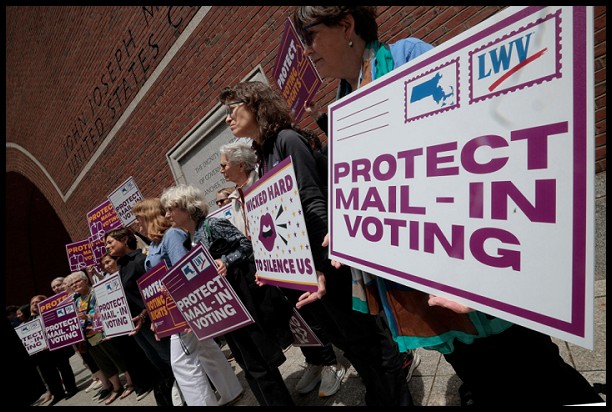
Also today, County Commissioners in Tarrant County (Fort Worth), Texas this week heard from poll workers with serious concerns about the County's 100% unverifiable computerized Ballot Marking Device systems made by Hart-Intercivic following apparent machine failures at the polls during the Lone Star state's March 3rd primary. Longtime pollworkers are hoping to see the computer systems replaced by a hand-marked paper ballot system before this November.
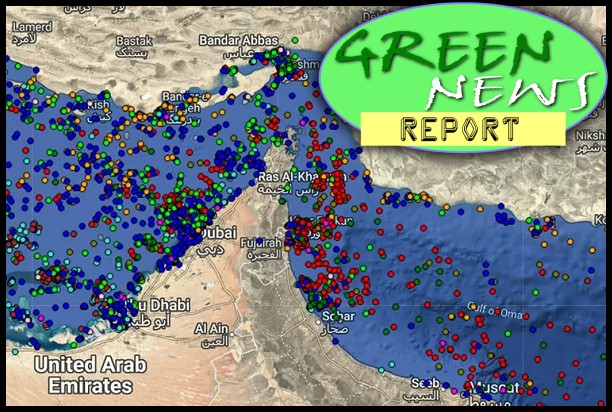
THEN... it's back to the nearly two-week old, but seemingly endless --- and clearly pointless --- War in Iran. This week, Iran has predictably shutdown all shipping through the Strait of Hormuz, where 20 to 30% of the world's oil and natural gas transits out of the Persian Gulf every day. In response, as oil prices spike along with gasoline prices, the White House is attempting to convince Americans that "short-term pain is necessary for long-term gain." The White House originally said it, and their friendly GOP propaganda outlets are now endlessly repeating the phrase, without ever actually explaining what that "long-term gain" might be or how we actually get there.
We're joined today by Roosevelt University political scientist DAVID FARIS, author of, among other things, several books on Middle Eastern politics, to discuss both the foreign and domestic implications of this disastrous move by the U.S. Administration.
"This has become an existential conflict for Iran," observes a gobsmacked Faris. "And because it's an existential conflict, they are doing everything that they can to keep shipping from getting through the Strait of Hormuz. It is unbelievable that people in the Trump Administration did not know or did not believe that this could happen. It's astonishing."
Faris says he has been having "terrible flashbacks to the early 2000s" amid all of this, remembering how the Bush Administration at the time simply ignored experts who warned "This is a bad idea. Don't do this!," before the Administration kicked off several disastrous wars of choice in the region anyway.
In Trump's case, argues Faris, "He's relying on a handful of sycophants in his administration, people without any expertise in the region. He's being led by the nose, I think, by people that have wanted to do this for a long time. And who very arrogantly thought that killing the Supreme Leader would set off a chain of events that would either lead to the regime collapsing or a transfer of authority within the regime to someone more friendly to the Trump Administration."
"The fact that they thought that in the first place is, in itself, evidence that they are not being advised by anyone with any kind of meaningful expertise about this region, or about Iran in particular. That is really scary to me, because we are all on this plane."
Beyond the "short-term disruption" of oil price spikes and potential global recession, he warns, if Trump didn't foresee those dangers, it's unlikely he saw the potentially nuclear ones that could come amid a full blown civil war in Iran or, worse, a "proliferation cascade" in which the lesson for countries in the region is simply to go nuclear.
"There's lesson after lesson after lesson that says to countries that are worried about their security or worried about the United States bombing or invading them or overthrowing their regime, that the only way to prevent that from happening for sure is to get a nuclear weapon," he observes, citing ironic potential fallout following a war that was, at least in theory, partially meant to prevent Iran from weaponizing it's own nuclear energy program.
As to the promise of the "long-term gain" Republicans now tout, with little if any detail when arguing that Americans must now be willing to "sacrifice"? Faris has no idea what that "gain" might be.
"It's unclear because they don't know," he says. "There's no way to communicate the stakes to the American people if you, yourself, don't have a strategic goal in mind, don't have a sense of what the fallout or the consequences might be. You're obviously not going to be able to prepare the American people to make sacrifices for that thing. The American people rightly perceived that there was no imminent threat to American national security from Iran. So this whole episode feels like it came out of nowhere."
Which, of course, it did. Unless you count the need to cover-up the damaging allegations against Trump from the Epstein Files as "somewhere". But, Faris also explains that all of this comes with an electoral price in November. If you don't like this war, "you know who to blame. Trump started this war [and] it's going to get worse the longer this goes on."
Tune in for much more on all of this, including the good Professor's explanation of why, if the U.S. is supposedly "energy independent" now, as Republicans like to claim, gas prices in the U.S. are skyrocketing anyway...
CLICK TO LISTEN OR DOWNLOAD SHOW!...
* * *While we post The BradCast
here every day, and you can hear it across all of our great affiliate stations and websites, to automagically get new episodes as soon as they're available sent right to your computer or personal device, subscribe for free at iTunes, Pandora, TuneIn, iHeart, Amazon or our native RSS feed!
* * *