
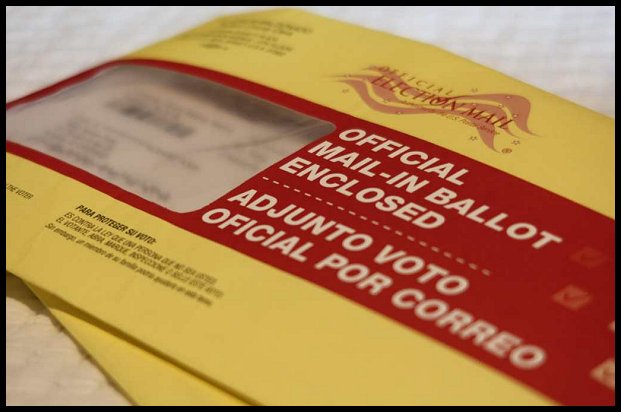
 Ohio’s Secretary of State Jennifer Brunner is planning “a first-of-its-kind audit of votes from the March 4 presidential primaries, saying the outcome should help ensure the integrity of future elections,” according to a report this morning from the Columbus Dispatch.
“Brunner is calling on 11 counties to volunteer for the audit, in which at least 7 percent of the votes cast in each county would be rechecked by hand,” the paper reports.
That’s good. But there are a couple of points that we hope she is well aware of, since such post-election audits can offer a deceptive result in a number of cases…especially on touch-screen machines…and especially in Ohio…
The report from the Dispatch notes:
“During her campaign, Secretary of State Brunner talked about elections that could be audited or verified,” spokesman Jeff Ortega said. “This is a further step toward that fulfillment.”
A 2007 audit of Cuyahoga County’s November 2006 election found a number of irregularities, including the loss of some ballots and others that were counted twice. Brunner praised that audit, which was ordered by the county board of elections, and suggested that other checks would be coming to ensure the accuracy of polling across Ohio.
That previously commissioned audit, of the Diebold touch-screens in Cuyahoga County after the ’06 election, was very helpful. Among the things found were that some 10% of the “paper trails” on the systems were “destroyed, blank, illegible, missing, taped together or otherwise compromised.” CNN’s Lou Dobbs Tonight (video and transcript here) reported that the audit revealed on many of the touch-screens, “the machine’s four sources of vote totals, individual ballots, paper trail summary, election archives, and the memory cards, did not all match up. The totals were all different.”
The study helped lead, in part, to scrapping the touch-screen systems all together in Cuyahoga, Ohio’s largest voting jurisdiction — its largest city, Cleveland, was the site of enormous election problems in 2004 — and the move to optical-scan paper ballots to be tallied at the county election headquarters.
But auditing “paper trails” from touch-screen systems can also be deceptive, and result in a false sense of security. A number of studies, including a landmark report from the NYU Brennan Center for Justice, revealed how such a system can be hacked to effect an election outcome, even while ensuring that the so-called “voter verifiable paper audit trails” (VVPAT) would still match up with the internal machine numbers in such a way that an audit would not likely discover the hack. Worse, such an audit — of a hacked DRE/touch-screen election — could actually result in a report claiming the election was “100% accurate,” even though it had been gamed.
The take-away here: Audits of “paper trails” may be helpful in finding problems with touch-screen voting systems. Audits of such systems which don’t find any problems when comparing “paper trail” results with machine results, may be exceedingly deceptive, and shouldn’t be taken as a sign that the touch-screens worked correctly. There is simply no way to use touch-screen voting machines safely — with or without a “paper trail” — in any American election.
One other caveat concerning Brunner’s proposed audits. As the Dispatch reports, “Local elections boards will randomly select precincts that account for at least 7 percent of the votes cast, and bipartisan monitoring teams will count ballots from the presidential primaries by hand.”
The trick here is assuring randomness. After the 2004 Presidential Election in Ohio — in Cuyahoga County, in fact — Election Officials pre-counted the paper ballots in order to assure that their mandated 3% of precincts counted in the Green/Libertarian Party recounts would match the official reported results. The “random” selection of ballots was little more than a show, as the election workers rigged the recount. Two of them, were eventually sentenced to 18 months in jail for their felony crime.
The verdict was thrown out on a technicality, and before a retrial could occur, the two women convicted pleaded “no contest” and were given no time in jail.
The take-away here: Make sure “random” really means random!
[UPDATE: EmLev points out in comments that there may indeed be a problem with Brunner’s definition of “random”]
Good luck, Ohio!





















A few relevant links:
Raw Story article on the Ohio audit.
Brunner’s press release on the voluntary audit.
Brunner’s directive, which describes the audit procedures.
The first two sentences of this, “R.C. 3505.27 provides minimum requirements for counting and tallying of ballots. It further provides that the secretary of State or a board of elections may ‘order other requirements to ‘assure an accurate count of all votes cast.'” are very interesting in the context of Brunner’s previous directive (2007-30) regarding what she would audit, which told would-be election thieves where to hide the evidence:
-Brunner directive 2007-30, page 6.
Bah…
Meaningless if chain of custody not rigid
Brad, you might be interested in seeing this guy. (No clapping though 🙂
Via Paul Kiel TPM
“On April 2nd, Spakovsky will be speaking to the Los Angeles chapter of the Federalist Society. The title of the lecture is “Litigating Elections: the Campaign Process in 2008”
Start: Wednesday, April 2, 2008 12:00 PM
Omni Hotel/ formerly Hotel InterContinental
251 South Olive Street
Los Angeles
Spakovsky speaks malarky in LA.
Hi Brad, I’m leaving this post here at the top of your blog so you’ll see it, even though it has nothing to do with this piece.
I’ve been doing a little looking to Lawrence Lessig’s Change Congress movement, and ran across a post in his google group by Josh Tauber who’s behind GovTrack.us.
Tauber has started up a legislative analysis community blog on the front page of his blog, and one of the posts there is about electronic voting machine legislation.
Check it out, if you haven’t already.
I forgot to leave a link for Change Congress.
Thanks, Linda. The post is, of course, bullshit. As “paper trails” on touch-screen machines do nothing to guarantee that an election is either accurately recorded, or can be audited later to determine that it was.
The Republican quoted in the post on GovTrack.us, pushing for his “paper trail” bill, obviously hasn’t a clue of how those systems work. Or does, and he doesn’t care.
One plan that virtually assures this audit will NOT be “random”: Asking for “volunteers”.
Don’t you think it is probable that those precincts with shenanigans going on, or simply sloppy record keeping, or known problems that might tend to embarrass those responsible for volunteering might be somewhat less likely to do so?
The rhetoric of the electronic election machine world is so bad it is getting like the Iraq world … it is a pile of shit that they keep spraying different perfumes on then asking us if we like it yet. Without even covering it up.
How to hack an election audit system with optical scan voting.
Audits may find system problems in optical scan elections that span whole counties or whole states. However, rigging one precinct in each county and the probability of getting caught is low.
And getting caught does not mean losing your effect of election manipulation as usually the damage of getting caught can be limited to a small area like one county or even one precinct and the rest of the rigged results are still effective.
And with the “random” audit not random, then manipulation can be very effective. The example I use is the MN Governor race of 2006 and the ES&S brand new optical scan voting machines installed in 80+ counties.