

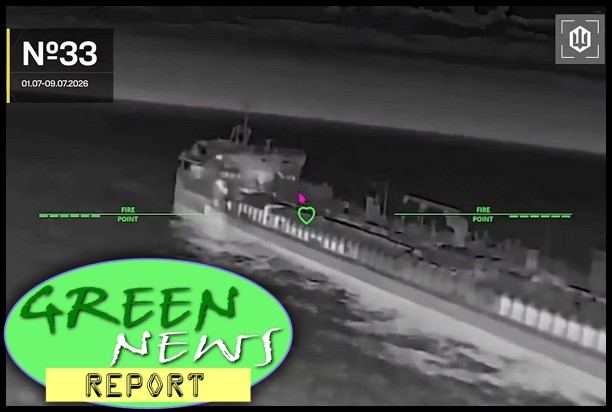
At 9:48am local time, after authorities determined the situation at Fukushima’s crippled and quickly over-heating nuclear reactors Unit 3 and 4 was bad enough to warrant it, they began dropping water from CH-47 Chinook helicopters onto the nuclear reactors, despite the considerable risks (to both crew and to the fuel rods in the reactor.) As of now, four drops have been made.
[Update: See video at bottom of article.]
This is a very very bad disaster movie. Water cannon trucks, usually used for crowd control, are now headed into the facility to spray water from a distance into the gaping holes previously blown out of the sides of the Unit 4 reactor where spent fuel rods are currently stored. Unit 4 was off-line for maintenance when last Friday’s earthquake/tsunami struck, with highly volatile fuel rods being held in a fuel storage pool. That pool, usually filled with circulating water, is feared to have gone dry, potentially allowing the rods to heat, burn, and release enormous amounts of radioactivity into the atmosphere.
Yesterday, chief government spokesman Yukio Edano said during his press conference that plans for similar helicopter water drops were canceled after it was determined they would be too dangerous. It was feared that quickly dropping large amounts of water could further destabilize the fuel rods and that slower, gradual pumping of water from the ground was preferred. Also, radiation exposure to helicopter crews was a concern as well.
That officials decided to go ahead with the helicopter drops today is likely an indication of the increasing severity of the growing crisis.
In an article today about the “Fukushima 50,” the small crew currently left at the plant to tirelessly keep its six reactors from complete meltdown, the New York Times notes today that “helicopter pilots who flew through radiation-laden smoke spewing from the [Chernobyl] reactor to drop fire-extinguishing chemicals on it,” were exposed to particularly high levels of radiation during that disaster 25 years ago next month.
Officials at Fukushima are saying that helicopter crews dropping water are outfitted in protective gear and may fly missions for a maximum of only 40 minutes each day to minimize their exposure. The drops are made more difficult, NHK World reports, by the need for the helicopters to keep moving as the water is being dropped, rather than hovering above the plants, as might otherwise be done during such drops.
Japanese Defense Minister Toshimi Katazawa held a press conference within the past hour following completion off the four planned drops. He said that radiation levels were too high yesterday to carry out the plan, but that early today, in consultation with Prime Minister Natao Kan, the decision was made to carry out the drops. “We could not delay further, so we decided to execute the plan,” NHK World’s translators reported him as saying.
In a competing press conference at the same moment, Chief government spokesman Yukio Edano offered little new information other than to say President Obama and Kan had a thirty minute conversation earlier today. The President offered sympathy and support, including for the nuclear crisis. Edano said investigators are working to determine how successful the water drops were, and he confirmed that water cannon trucks from the Tokyo Police were en route to the nuclear plant. Fukushima is located some 180 miles north of Tokyo.
UPDATE 8:20pm PT: About thirty minutes after Edano finished, officials from Tokyo Electric Power Co. (TEPCO) spoke at their own news conference. They said that, contrary to earlier reports, they were able to determine that there was still some water left in the spent fuel storage ponds at Unit 4 and so it was decided to prioritize the initial water drops today onto reactor Unit 3.
UPDATE 9:42pm PT The Defense Minister has said there will be no more water drop attempts today.
UPDATE 11:08pm PT Video of the helicopter water drops now follows below…
• Live streaming video coverage via NHK World here…
• Follow our own quickly moving coverage on Twitter here: @TheBradBlog






















Last night I watched Rachel Maddow, she had an expert on who said that we needed to deploy/invest in more global radiation detection devices due to the ‘plumes’ that now appear to be on their way to any way the wind blows, like the one that the USS Ronald Reagan apparently sailed through…her remark was very poignant, along the lines of “then what?”
There doesn’t seem to be a plan for “then what?” Early warning for evacuation seems to be about the only benefit of knowing where this radioactive shit is.
This is like a fucking sci-fi/horror novel. Straight outta Koontz. I play this kind of shit on my PS3.
When will the oligarchs and their lieutenants admit that they have broken the planet? How many more humans will be thrown onto this pile on clear suicide missions, accomplishing virtually nothing?
Mankind is out of solutions. Worse than Chernobyl. No ability to cap or contain this, ever.
Japan = uninhabitable.
The problem really isn’t nuclear power, at least it’s not the root problem. The problem is the military-industrial-financial complex that leads them, and us, to live this way.
Actually, a pretty significant part of the problem is the aftermath of innovation – dealing with the waste. Man has managed to engineer any number of incredible ways to produce energy, start wars, build asbestos-laden skyscrapers, etc.
It’s the planning and managing of the aftermath that seems to be overlooked…because it’s not glamorous, easy or profitable. Nuclear energy, without adequate spent fuel rod storage solutions – is literally a bridge to nowhere.
It is the fatal design flaw in the system. They kicked the can as far down the road as they could, but it is over.
Soul Rebel – Word today (I’m too tired to track down the link, so forgive me – San Jose Mercury News, I think) that EPA is relocating more radiation sensors to the west coast.
FWIW.
I think they prioritized reactor 3 for the air drops because they are worried about the MOX fuel, not because there’s water still in 4.
… Xisco said…
Side note: With the Japanese bureaucracy blithefully exercising its self-destructive “information control” policies you’ve got a lot of media outlets referring to water drops on the reactors as opposed to water drops on the cooling ponds.
Seems that they do not understand that one of those events indicates that the situation is terrifyingly desperate and that the other event indicates that the situation is horrifyingly
catastrophic…
Even in the midst of meltdown details matter…. for all of us.
in this NY Times article it says the Japanese have confirmed that there is no water in #4 cooling pool
Brad, here’s a LATimes article that has some info about testing equipment on the west coast which they quote an “expert” who predicts the radiation will start to hit Cali by Friday.
“Small amounts of radiation headed for California, but no health risk seen”
http://www.latimes.com/news/sci...usa-20110317,0,1431467.story
NY Times also has this article on the projected radiation path.
and the animated path through tomorrow 3/18
Thank you for your continuing coverage of this, Brad. I particularly appreciate the link to the article about the workers. Reading it, though, I can’t help but wonder: even if they survive, wohn’t they be too contaminated to return safely to their loved ones or to other exposure to the public?
… Emily asked…
That’s not an issue, Emily.
You’ve apparently gotten the wrong impression of what radiation is.
This is the short version. More in depth and accurate materials are widely available on the net:
Radiation is the variety of rays and particles that are emitted by radioactive materials.
In terms of the problem in Japan: Each individual x-ray photon, gamma ray photon, alpha particle, beta particle or neutron is a one-shot deal. It’s emitted by radioactive material and flies through space until it hits something that absorbs it.
Depending on the particular type of radiation it might pass through quite a bit of matter before being absorbed by something.
When the matter that absorbs the radiation happens to be a cell in a human body… damage can occur.
But that’s usually the end of it.
The radioactive material that emits the radiation is what can can be tracked back into the house or inhaled or ingested into the body.
And that’s contamination is what the suits and respirators are designed to prevent, even more than the limited shielding against radiation proper that they provide.
But even in the case of human contamination the material can be cleaned off the body and/or excreted by the body. (certain chemicals can force the excretion of contaminants)
One of the exceptions is that neutrons can “activate” material even inside the body, but even that can be removed with treatment… if the patient lives long enough for that to matter.
So it’s possible for a suited worker to get a lethal dose from the reactors… and still be able to kiss their loved ones goodbye.
Again, this was the short version.
If radiation increases Japan & Japan’s Neighbouring countries will also face many problems
Just happened upon this video of a marketing campaign for Sapporo Beer that’s apparently been out for nearly a year. The ironies are astounding.
http://www.youtube.com/watch_popup?v=K-Rs6YEZAt8
Note the water bucket brigade.
It’s increasingly obvious that Fukushima was considered a write off as early as hours after the earthquake. Multiple structural failures of spent fuel cooling during the quake might explain this, but I think mitigation efforts would still have been massive if that were the issue. All I can figure is a massive spill/leak of plutonium (combined with structural damage perhaps?). Can anyone comment on the refueling process, are fuel components for MOX reactor stored onsite? reactor side or separate building? MOX fuel bundle assembly happens where? If there is a fuel rod assembly building onsite, could a plutonium containment failure (earthquake) have set up a kill zone around damaged reactors?
From what I read re: MOX, it was only installed for the first time there around a year ago, therefore there is no “spent” variety, only that within the “containment” vessel, though that word is no longer apparently applicable to any of these structures.
Not spent MOX.
Spent Uranium bundles stored, yes we know that. How was MOX pre-fueling/fueling handled? Crux of question, did an earthquake induced plutonium accident setup a kill zone around damaged reactors?
I don’t know how else to view it. That is why I’ve been saying, it’s over. There is nothing left for man to do aside from throwing a few more bodies on the pile. I wish this were not the case, and I’d be ecstatic to be wrong, but optimism is totally uncalled for in light of the actual events. This is worse than any worst case scenario ever envisioned by the industry, or anyone.
The mox rods can’t differ greatly from the properties of the standard rods or the plant would lose its license and heads would roll… literally.
If the pools had cracked and leaked during the quake and tsunami the resultant explosions and radiation wouldn’t have waited several days to manifest and wouldn’t have been mistaken for anything other than what they were.
The real problem with the mox rods is that once meltdowns begin plutonium and its byproducts are now added to the environmental havoc. And That would make a disastrous situation even worse.
Areva supplied MOX fuel to Japanese reactor, also on DOE payroll
The multi-billion dollar Mixed Oxide Fuel (MOX) program, under construction at the Savannah River Site, is supposed to contribute to the non-proliferation of nuclear weapons. But this very generous contract in the hands of the French company AREVA remains controversial.
http://www.dcbureau.org/2011031...ar-circle.html
See why the CEO of Areva NA went on CNBS and lied through his teeth about ANY Areva involvement in Japan (:55 into the first video)?
http://us.arevablog.com/2011/03...ncipal-factor/
See how corporate/government incest (fascism) works?
In response to a question about the safe storage of MOX fuel at civilian reactors, former Energy Secretary (from 2001 to 2005) Spencer Abraham, who is now Chairman of the Board of AREVA Inc., remains confident in the MOX project. “After the fall of the Soviet Union very substantial numbers of weapons and large amounts of weapons grade nuclear material were left under-protected in the FSU,” he relates. “The international community was deeply concerned about these risks and the US acted to develop a strategy for the safety and security of these weapons and materials. That risk was far greater than the threat posed by the MOX fuel process. At the time I was Secretary I was very confident of the ability of the US to carry out these MOX processes safely and to protect these materials, as we protect large quantities of all nuclear materials in our country.”
http://www.pdfdownload.org/pdf2...rl=http%3A%2F%2Fwww.dcbureau.org%2FAbraham%2520responses.pdf&images=yes
Wall Street OWNS the SEC
The Nuclear Industry OWNS the NRC
And David Rockefeller OWNS all of it.
It’s time to name names. No more speaking of the collective “they.” “They” have names. It’s time to use them specifically, hold them to account, and claw-back their ill-gotten gains.
“They” include Jack Welch – and, if he doesn’t start fully advocating on the side of the well being of the American people, “they” include Obama.
This shit must stop now. It’s time to make some arrests.
… ChooseReason said…
Japan has an experimental mox fabrication facility at the Tokai nuclear plant and is building up a dedicated production facility at Rokkasho to be operational by 2015.
What do you specifically mean by “plutonium kill zone?”
Note that even a military helicopter will come within 300 feet of this “plutonium kill zone”
http://www.guardian.co.uk/world...water-reactors
I’m sure Zapkitty will have a far more apt description, or question whether there is actually any plutonium danger to human life, but the military experts inside this helicopter, despite wearing protective gear, CANNOT get any closer than shown in this video for some good reason.
I think “Plutonium Kill Zone” is as good a description as any, but then I’m not a nuclear industry spokesperson or expert like some here. Just an observer.
Reading:
http://webcache.googleuserconte...=www.google.ca
(google cache as original pdf now offline)
I assume that plutonium handling was of a temporary nature, new facility behind schedule for political reasons.
Zap,
Just can’t think of another scenario that would preclude massive technical response on Friday March 11.
My best guess is massive (dry?) PU spill that bathed damaged reactors in lethal gamma ray bubble, making repair operations impossible (LD in minutes).
More workers were drafted for the frontline of Japan’s biggest nuclear disaster as radiation limits forced Tokyo Electric Power Co. to replace members of its original team trying to avert a nuclear meltdown.
The utility increased its workforce at the Fukushima Dai- Ichi plant to 322 yesterday from 180 on March 16 as it tried to douse water over exposed nuclear fuel rods to prevent melting and leaking lethal radiation. Levels beside the exposed rods would deliver a fatal dose in 16 seconds, said David Lochbaum, a nuclear physicist for the Union of Concerned Scientists and a former U.S. Nuclear Regulatory Commission safety instructor.
http://www.bloomberg.com/news/2...or-humans.html
Zap @12 stated,
While I suspect you didn’t intend it as such, your comment grossly understated the problem which is not individualized rays emitted by radioactive materials but the isotopes:
Strontium”¦’is chemically similar to calcium”¦So it gets incorporated into bones and teeth and can stay there, irradiating the body for a long time.’ Strontium is most commonly linked to leukemia.
Cesium works”¦more like potassium when it’s inside the body””which means it circulates everywhere and can contaminate everything. Cesium”¦gets excreted in urine over the course of months or years””but that’s more than long enough to cause cancer of the liver, kidneys, pancreas”¦
Most worrisome”¦is plutonium-239″¦the vast majority of fuel rod is made of plutonium”¦’It’s extraordinarily toxic.’ Plutonium exposure usually comes from inhalation”¦so it’s mostly associated with lung cancer. What’s more, plutonium’s half life is 24,000 years, which means anything released in Fukushima today could be around at dangerous levels for up to a half a million years.
BTW Brad, that helicopter water dump in the video looked especially ineffective. I’m surprised they are not employing C-130 transports for much larger fixed-wing dumps like we’ve seen here in So. CA for fighting brush fires. These would deliver water in far greater volume.
Good link Plunger, am I wrong to keep returning to the idea that whatever heroic measures are happening today would have been heroic and useful, and a lot easier to do last Friday if there wasn’t something additionally going on?
If a fuel pond (at #2, or #4?) had a catastrophic structural failure last Fri and drained, would that have immediately setup a large enough killzone to preclude emergency work on other reactors? (or as I asked earlier, would it take something like a plutonium spill)
Here’s how, despite the imposed “no fly zone” – the US discovered and stated that at least one if not two spent-fuel cooling ponds were severely damaged and leaking and/or totally dry – putting the lie to Japan’s claims to the contrary:
http://online.wsj.com/article/S...googlenews_wsj
Any attempts to refill these damaged ponds will fail. As witnessed, helicopter drops are totally ineffective. C-130 drops might come in with such force to cause further damage, with little if any hitting or remaining in the pool, I suspect. Water cannons would be the equivalent of pissing up a fifty foot tall tree to put out a fire at the top.
It’s all “Kamikaze-Theater” at this point where adding humans to the equation is concerned. They’d have to rig a pilotless, fly by wire technology to a helicopter with a bucket, and operate it at low levels directly above the ponds, to have any impact. And they have to do so continuously for a year or more. Not happening.
Botched Container?
Mitsuhiko Tanaka, 67, working as an engineer at Babcock Hitachi K.K., helped design and supervise the manufacture of a $250 million steel pressure vessel for Tokyo Electric in 1975. Today, that vessel holds the fuel rods in the core of the No. 4 reactor at Fukushima’s Dai-Ichi plant, hit by explosion and fire after the tsunami.
Tanaka says the vessel was damaged in the production process. He says he knows because he orchestrated the cover-up. When he brought his accusations to the government more than a decade later, he was ignored, he says.
The accident occurred when Tanaka and his team were strengthening the steel in the pressure vessel, heating it in a furnace to more than 600 degrees Celsius (1,112 degrees Fahrenheit), a temperature that melts metal. Braces that should have been inside the vessel during the blasting were either forgotten or fell over. After it cooled, Tanaka found that its walls had warped.
‘Felt Like a Hero’
The law required the flawed vessel be scrapped, a loss that Tanaka said might have bankrupted the company. Rather than sacrifice years of work and risk the company’s survival, Tanaka used computer modeling to devise a way to reshape the vessel so that no one would know it had been damaged. He did that with Hitachi’s blessings, he said.
“I saved the company billions of yen,” Tanaka said in an interview March 12, the day after the earthquake. Tanaka says he got a 3 million yen bonus ($38,000) from Hitachi and a plaque acknowledging his “extraordinary” effort in 1974. “At the time, I felt like a hero.”
Read more: http://www.sfgate.com/cgi-bin/a...#ixzz1GsRUwKBv
Plunger, I’m contending that all of these efforts would have been largely pointless last Friday, and I’m wondering why. (Otherwise the heroics would have been done last Fri/Sat/Sun…)
Plunger @ 31
I don’t know what to make of that story. Could be true or not. Steel melts at 1300 °C (2400 °F).
Youtube intro course on radiation so people know what they’re dealing with. Haven’t watched it yet.
Radioactivity http://www.youtube.com/watch?v=EVB0F7kORII
Radioactivity II http://www.youtube.com/watch?v=EHwpqszz-Rc
Could be the optics of it all. As I think we agree, the images of sea water as the “solution” are in effect, and admission of total defeat – beyond “last-ditch.” When you are trying to pour salt water onto metal to solve a problem, that’s akin to throwing a wrench into the gears of an engine to turn it off. It works once.
I think their PR machine wouldn’t allow those images to be witnessed at a time when they were still engaged in perception management and happy talk (thus the need for a drone flight to put eyes-on the reality of the emptied spent-fuel pools). There are billions in profits at stake, with pressures from some of the biggest players in the world coming to bare on the perception of “control.”
It wasn’t about doing what’s right. It was an ongoing and culturally ingrained process of answering to their masters and spewing the false talking-points, until reality overtook perception to such an extent, that even “Baghdad Bob” would appear credible by comparison.
That’s my take.
… Ernest A. Canning said…
Nope. What I did was explain the difference between radiation and radioactive material and how a properly suited and decontaminated worker could receive a harmful dose of radiation and yet not be a hazard to others once they were out of the contaminated area.
The isotopes you mentioned fall under the category of “radioactive materials” and if a worker is not contaminated by those materials then other persons are safe around that worker.
And cue the hysterical screeching yet again… some of the stuff you cite is not accurate in and of itself, especially the plutonium stuff.
The author of that, Helfand, is apparently an anti-nuke activist who amplifies old myths about plutonium that have long since discredited.
Does having plutonium in the mix at #3 make it worse than it would be with just the uranium?
Yes.
Does the plutonium make the mix more toxic than with just the uranium?
Yes.
Can plutonium contamination kill you?
Easily, given sufficient quantity and exposure.
Is it extremely toxic?
No. That’s a myth that grew out the atomic age when all too many workers died due to accidental exposure and faulty or nonexistent safety protocols .
But a lot of anti-nukes never accepted the scientific debunking of the myth of plutonium hyper-toxicity… which is somewhat understandable given the bullshit thrown around by the AEC and the DOE… and anyone who tries to point this out gets labeled as pro-nuke…
… even if they are not.
The anti-nukes are going to have to learn that misinformation that supports their side is no better than misinformation that supports the other side.
Misinformation corrupts a movement, and clinging to misinformation corrupts a movement absolutely.
Assume that a lot of very wealthy people had to sell a ton of securities on the stock market to exit their long bets on nuclear power. Those are the forces that would have been encouraging the talkers to lie (and hold off on admitting that the spent fuel pools had been compromised), until such time as they could exit their long positions, and get on the short side.
That this happened on a weekend caused the market players to have to suffer through the delay until the markets opened, and the illusionists were hard at work throughout the weekend to extend the myth that something could be done to correct the problem.
Follow the money.
Cue the Zapkitty industry response:
OMG – the shills are off the charts:
Think about it: despite being faced with a Magnitude 9 Great Earthquake which knocked the whole island of Honshu several feet to the west, a 35ft tsunami and the complete breakdown of the infrastructure, a handful of rather ancient atomic reactors have remained largely intact and have released only tiny amounts of radiation.
Read more: http://www.dailymail.co.uk/deba...#ixzz1GshWAhQR
… plunger said…
There’s a zapkitty industry? Do I get royalties for zapkitty licenses?
… is there a zapkitty ellipsis franchise chain?…
… plunger said…
Evidence to support the assertion?
Abounds.
Dear Zapkitty, re:
Ernest A. Canning said…
“While I suspect you didn’t intend it as such, your comment grossly understated the problem which is not individualized rays emitted by radioactive materials but the isotopes:”–to which you responded–
Nope. What I did was explain the difference between radiation and radioactive material and how a properly suited and decontaminated worker could receive a harmful dose of radiation and yet not be a hazard to others once they were out of the contaminated area…
My take is that what you’re saying you did and what Ernie is saying you did are not mutually exclusive. For instance when you say–
When the matter that absorbs the radiation happens to be a cell in a human body… damage can occur.
But that’s usually the end of it.–
that sounds like no big deal. But the damage that can occur can kill you, correct? Separate from any danger you might pose to others, no?
Also, do you have links to info backing your assertion that plutonium is not highly toxic. I don’t read this stuff like you apparently do, but I do read, and I’ve never heard THAT one. Thanks.
Or is this gonna be not highly toxic like it only klls you for 100,000 years not half a million? And you need a teaspoon not a pin drop size?
What exactly do you mean by “not highly toxic”?
Google search results:
plutonium + “highly toxic”
101,000 results
plutonium + “not highly toxic”
2,860 results
http://www.talkingpointsmemo.co...more?ref=fpblg
Just asking, that is a hole in reinforced concrete on one side with a debris field on the other side, yes?
… David Lasagna said…
That’s correct. The question from Emily concerned irradiated workers being a radiation hazard to others.
I explained the basics of why that wasn’t the current concern.
Sorry, friend, you’ve been snookered by the unending hyperbole adopted by all too many of the anti-nukes… and the parasites who ride them for fun and profit.
That
Wasn’t
What
I
Said.
to quote:
http://en.wikipedia.org/wiki/Plutonium#Toxicity
During the 40’s and 50’s it was commonly believed that as little as 60 micrograms (“a grain of salt”) of plutonium taken into the body of an 80 kg human in any fashion meant certain death.
And when the anti-nuke movement really got going that figure was translated as “The most poisonous substance on Earth!” and pushed hard. An appropriate tactic given what was known.
But time passed and a baseline of actual exposure data has gradually been developed. And when the results were compiled in new studies they showed that several of the theories and assumptions concerning plutonium poisoning were did not hold up.
Lethal doses of plutonium pretty much have to be respired and the ld50 for that was about 400 micrograms for an 80 kg human.
Toxic?
Yes.
Dangerous?
Yes.
A cancer risk?
Yes.
Deadly?
In sufficient quantities,yes.
“Deadliest substance on Earth”, “”extrordinarily toxic”?
No. Just, no.
http://chemistry.about.com/cs/5/f/blpoison.htm
Ricin beats it handily with 1/80th of the dose of plutonium and the champion killers at the top of the chart, tetanus and botulinal neurotoxin, kill at 1/5000th the dose.
But a lot of anti-nukes never accepted the scientific debunking of the myth of plutonium hyper-toxicity, which is somewhat understandable given the bullshit thrown around by the AEC and the DOE, and anyone who tries to point this out gets labeled as pro-nuke… even if they are not.
Trying to point out to the anti-nukes that they are going overkill on the overkill generally has one result. I noticed that “plunger” declared victory in another thread before I even composed this answer. As far as all too many of the anti-nukes anyone who doesn’t chant the shibboleth “Deadliest. Poison. Ever.” is automatically revealed to be a salaried employee of G.E.
No deviation is permitted.
It’s sad to read letters from anti-nuke groups to government regulators and academic societies demanding that the “Deadliest Poison” crown be reserved for plutonium no matter what the scientific evidense says.
Misinformation is a corrupting influence and it is not needed… they already had an open-and-shut case against the fission plants even before Fukushima.
You began to catch on towards the end there 🙂
And as for what I meant by that… I never said that.
zapkitty… seems like you’re playing games, trying to see who will do the math…
for an 80kg man (176 lbs) the (US RDA) of magnesium is 400 mg, which is a very small amount relative to his size… fits quite nicely in a vitamin pill with a bunch of other vitamins & minerals… this 400 micrograms, the lethal dose of plutonium, that “isn’t highly toxic” is a magnitude smaller than that 400mg that fits nicely..
1000 micrograms (mcg) EQUALS 1 milligram (mg)
you could inhale that much without even being aware…
Dear Zap,
Some of what you write is very clear and easy to follow. I checked your Wikipedia link. If that Wikipedia entry reflects scientific consensus, then I can see the basis for your opinion about the toxicity of plutonium.
Then some other stuff you write I just don’t get. For instance, to my request for info supporting your claims about the relative toxicity of plutonium you respond with–
Sorry, friend, you’ve been snookered by the unending hyperbole adopted by all too many of the anti-nukes…
Now I apologize for leaving off the question mark to what I meant as a question but it seems weird to characterize a request for clarifying information as being “snookered”. I don’t get that.
The other thing that is puzzling to me is your insistence that you never said “highly toxic”. Again, I’m partly to blame as I was imprecise. I agree, you didn’t say “highly toxic”. You said plutonium wasn’t “extremely toxic.”
For exact wording, okay, I take your point. But for your intended meaning I don’t see the difference between “highly” and “extremely” here.
I confess that I haven’t read all the back and forths between you and Plunger. But my sense is that you two may share at least an occasional leaning towards hyperbole.
David and Sukabi,
Not playing games as such, just trying to establish a factual basis for the discussion of a subject that draws a lot of heat in the best of times. And these are far from the best of times.
As for the range from “very” to “highly” to “extremely” to “extraordinarily”… the battle of the intensifiers was inevitable.
As an example: “plutonium kill zone” is a meaningless phrase. Is someone talking of a criticality incident? Or just a subcritical mass of plutonium?
The former might burn you down at a distance depending on the details, the latter is just a nasty clean up job for the people in the suits.
One could not be hidden, the other would have been dealt with by the workers. But there was no plutonium at the plant outside of the mox rods. Details make a difference.
What would be the differences between criticality incidents involving uranium fuel, mox fuel, and plutonium fuel?
The answers would involve how much of each material is involved and the details of how each incident came about. And of course there was no plutonium fuel rods at the plant.
And all too soon there is going to be discussion of the people who will have to live and work in and with and around this nightmare, however far it may extend when it’s over…
… and it would be useful to be able to discuss the matter without an incessant background shrieking of “they are all doomed to die because of the plutonium!”
Details matter. I just offered an example of what happens when they are lacking.
Zapkitty, the bottom line is that .4mg is a very minute quantity of a substance, and semantics aside, if that quantity of a substance is lethal to a 176 lb. man, then I don’t think it really matters a twit if it’s “lethal” “very lethal” “extremely lethal” “extraordinarily lethal”. To the person exposed and their family it’s “fuck me, I’m dead lethal”… and dead is dead, there are no qualifiers.
… sukabi said…
Correct… if the lethal dose is indeed 400 micrograms.
Not playing games, 400 ug is indeed one estimate, but it’s based on extrapolations from animal tests and other studies have yielded other figures. 400 ug seems to be the lowest estimate so… better safe than sorry.
Simply put: no one is sure and no one has conducted tests on humans since the dark days of the 1950s. Studies have shown that the “grain of salt” and “deadliest poison” bon mots are simply not true, but plutonium exposure has been so carefully controlled that no one is known to have died of acute poisoning and even the exact cancer rate is unsure.
But try getting all that through the shrieking… go ahead, I’ll reread “Gravitation” while you try…
If it’s allowed to happen, yes.
What were the circumstances of exposure? As all lethal toxicity estimations are from respiration of aerosolized particles… would not an appropriate filter mask have a chance of preventing it?
*And at that point the inchoate yet thunderous screeching declares me an agent of TEPCO who’s trying to cover up for the oligarchs by not declaring all the people caught in the affected zones automatically dead and burying them post-haste.
http://en.wikipedia.org/wiki/Tr...%28Internet%29
Concern troll
A concern troll is a false flag pseudonym created by a user whose actual point of view is opposed to the one that the user claims to hold. The concern troll posts in web forums devoted to its declared point of view and attempts to sway the group’s actions or opinions while claiming to share their goals, but with professed “concerns”. The goal is to sow fear, uncertainty and doubt within the group.
Trolling is a game about identity deception, albeit one that is played without the consent of most of the players. The troll attempts to pass as a legitimate participant, sharing the group’s common interests and concerns; the newsgroups members, if they are cognizant of trolls and other identity deceptions, attempt to both distinguish real from trolling postings, and upon judging a poster a troll, make the offending poster leave the group. Their success at the former depends on how well they “” and the troll “” understand identity cues; their success at the latter depends on whether the troll’s enjoyment is sufficiently diminished or outweighed by the costs imposed by the group.
Zapkitty re:#53,
Details matter. I’m with you there.
Detail #1. Not everyone who disagrees with you is screeching.
Detail #2. You keep mentioning the screeching, the “snookering”, and the demonization of yourself even when it’s not happening. If it’s happening, okay, worth mentioning. When it’s not, you’re lumping in the boron fusion with the fission with the rubber band driven airplanes with the French couple going for a walk. Some of us are just taking issue with your point of view, it seems to me.
Detail #3. What I get from you is that while acknowledging problems and dangers with the world’s current nuclear power installations and the enormous current mess in Japan, your tone suggests a much friendlier or forgiving or beneficent attitude to it all than I have.
Zapkitty, you’re still playing semantics games… and you know it. I suppose you’d like to perform human testing to determine the exact dose that is lethal, that way you could say with certainty that “you’re wrong, xxx is the lethal dose, you’ve been screeching about nothing”
what IS known, is that whatever minute amount of plutonium a person is exposed to they will either get extremely sick, or extremely dead and that there isn’t really a “safe” amount of exposure, as there will be some damage to the cells / dna and there will be health issues that follow that person for the rest of their lives…
I’d also like to say Zapkitty, your comment concerning exposure:
This is no longer an exercise in theory…. you seem to be assuming that NO ONE has been exposed to anything harmful at the Fukushima reactors, and that a simple respirator or mask would protect them from any harmful dust…. seriously? wandering around in a nuclear wasteland with a mask for protection? Sorry dude, I don’t want you watching out for me or my family.
… sukabi said…
No. I’m just not assuming that everyone exposed to the disaster is automatically doomed.
Sad. Why would you suppose that I would wish to commit an atrocity… just because I point out the fact that we don’t know how much plutonium contamination it takes to kill a human or cause cancer? Saying that people have been extremely cautious about the stuff and thus we don’t have much mortality or cancer data about contamination is simply stating the facts.
They have been cautious for good reason. The bar is set high even now because the physics and biology of contamination indicate that plutonium taken internally should be toxic in microgram or milligram amounts… but for those caught in the disaster the details will matter.
To them the details will be all that matters.
… or not. By the data to date internal plutonium contamination results have been a roll of the dice.
And then there is the issue of treatment. There are compounds that can remove small amounts of plutonium from the body relatively quickly.
Now, do you understand that that is not an endorsement? Do you understand that I’m not saying that the oligarchs had the right to roll those dice using the population as chips?
But we literally don’t know what will happen. The point will be to try to not have to find out.
The suits and respirators can help the workers avoid internal contamination, external contamination with plutonium is not as big a health issue as can be washed off and its radiation cannot penetrate the skin, much less the suit.
External contamination with other materials will actually be more problematic.
(What’s limiting and hindering the workers now is the radiation output that is the result of massed quantities of fissile material undergoing chain reaction in the reactors and pools… the gamma radiation from which can penetrate skin, suits, concrete…)
And of course there is the radioactive plume generated by all this… a combination of short-lived radioactive gaseous isotopes and an unknown assortment of contaminant particles.
Zap, who has “discredited” as myth Helfand’s amplification of the dangers of plutonium. Care to provide a link?
Oh, and while you are at it, Dr. Ira Helfand is a board member of Physicians for Social Responsibility and an expert on nuclear power, nuclear waste and radiation exposure. What are your credentials, Zap?
No. Why would you reach such a very odd conclusion? You should be as aware of the publicly released radiation levels at the plant as I am.
The workers at Fukushima have put their lives on the line and are undergoing exposure far in excess of what is normal in order to save eastern Japan. The same goes for the soldiers and other workers.
There’s been no data available that I’m aware of on external or internal contamination events. No data at all that I’m aware of, much less any details. If that’s the case then we just don’t know.
The suits and respirators are designed to handle that situation…
… or should be, unless the oligarchs skimped again…
… does the fact that the dust represents a terrifying and potentially lethal power factor mean that it also has magical powers?
Your family should be nowhere near this if there’s any way that can be arranged.
But if the worst happens and they are caught in this or a similar event then even simple things like appropriate filter masks and outer wear can greatly reduce the chances of internal contamination until they can be evacuated… and in the event of such a disaster they should be made aware of those things, don’t you think?
Dear Zapkitty,
For what it’s worth, I hear you and am largely with you on comments #57 and #59.
David
In re: ZapKitty’s comment @ 59:
FWIW, this is from the IAEA’s latest update on injuries and radiological contamination at the plant, as of yesterday.
* 2 TEPCO employees have minor injuries;
* 2 subcontractor employees are injured, one person suffered broken legs and one person whose condition is unknown was transported to the hospital;
* 2 people are missing;
* 2 people were “suddenly taken ill”;
* 2 TEPCO employees were transported to hospital during the time of donning respiratory protection in the control centre;
* 4 people (2 TEPCO employees, 2 subcontractor employees) sustained minor injuries due to the explosion at Unit 1 on 11 March and were transported to the hospital; and
* 11 people (4 TEPCO employees, 3 subcontractor employees and 4 Japanese civil defense workers) were injured due to the explosion at Unit 3 on 14 March.
Radiological Contamination
* 17 people (9 TEPCO employees, 8 subcontractor employees) suffered from deposition of radioactive material to their faces, but were not taken to the hospital because of low levels of exposure;
* One worker suffered from significant exposure during “vent work,” and was transported to an offsite center;
* 2 policemen who were exposed to radiation were decontaminated; and
* Firemen who were exposed to radiation are under investigation.
In addition to those, earlier reports several days ago, had said that some 120 people were believed to have been found to have been contaminated from the evacuation zones, and, you’ll recall, the crew of the USS Ronald Reagan were also said to have been exposed, to some extent, when they sailed and/or flew through a radiation plume some 60 miles off shore earlier this week.