It’s always a busy news weekend in the Trump Era. But, as made clear on today’s BradCast, this one was even busier than most. Much. [Audio to full story follows below this summary.]
FIRST UP…
- On Friday: Maine‘s Graham Platner officially filed paper work to withdraw his Democratic nomination to run against Republican U.S. Senator Susan Collins this November. The race for the state Democratic Party to find a replacement for him, via statewide party convention apparently, is on.
- On Saturday: South Carolina‘s 4-term Republican U.S. Sen. Lindsey Graham died just hours after returning from Ukraine. Cause of death is, so far, believed to be an aortic rupture related to hardening of the arteries. Toxicology testing is still out. But before he could even be placed in the ground, the state’s Republican Gov. Henry McMaster named Graham’s sister, Darline Graham Nordone, to take his place as Interim Senator to fill out the rest of her late brother’s term. The battle to fill his slot on this November’s ballot, however, via statewide Republican Party convention, is on. Whoever wins, will run against Democrat Annie Andrews.
- On Sunday: Former Republican Senate Leader Mitch McConnell issued a statement purported to be proof of life after four weeks of absence from the Senate without explanation following a 911 report of an unconscious man at his home who required CPR. The 84-year old, seven-term Senator even included a photo from his hospital bed which is purported to be proof of life (in an AI age). The statement claims he took a fall about a month ago, was subsequently hospitalized and faced a “mild” case of pneumonia, but that “folks of my generation often hesitate to share the vulnerability that comes with growing older.” The statement posted to his website claims he is now in a rehabilitation center but won’t be returning to the Senate “quite yet”. I explain today again why the date of August 3rd is now so important here, and how it may be used to prevent Kentucky’s Democratic governor from either calling a special election or attempting to fill McConnell’s seat with an interim appointment.
- On Monday: After several days of “they started it!” attacks reignited between the U.S. and Iran, the Islamic Republic announced they were shutting down the Strait of Hormuz once again, bringing an official end to Trump’s so-called “Memorandum of Understanding” well before its 60-day truce was over. In response, Donald Trump declared that the U.S. would be taking over the Strait and charging a 20% toll on the value of every cargo ship that is allowed to pass. That, of course, would be both in violation of international law and the direct opposite of what Trump’s own Sec. of State Marco Rubio said just last month was legal in regard to charging tolls on the international waters. “That’s international waterway. There isn’t a nation on Earth that supports having to pay money to go through the straits,” Rubio told reporters in Bahrain on June 25, insisting there was “zero support among the Gulf countries for any sort of toll or fees or anything that charges for the use of international waters. The President’s made it clear that’s not going to happen.” Psych!
THEN…
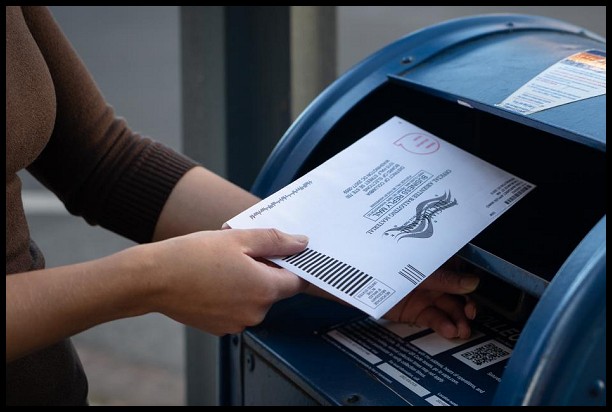
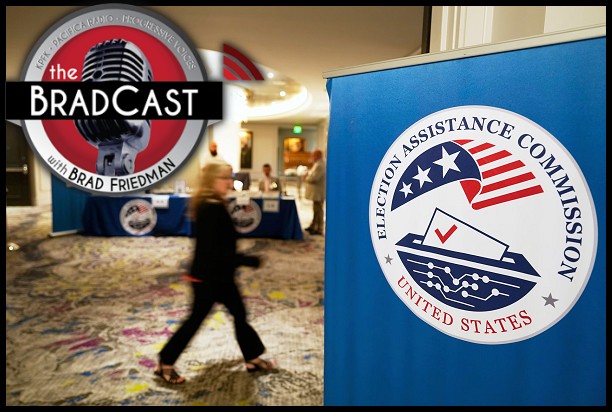
Late last week, buttressed by a new ruling from his corrupted activist SCOTUS, Trump fired the two sitting Democratic Commissioners on the bi-partisan U.S. Elections Assistance Commission (EAC). The one remaining Republican resigned, following the resignation by the Commission’s other Republican. That leaves zero Commissioners on the EAC in the middle of primaries and just months before this November’s critical midterms.
Is that cause for alarm? It sure sounds like it! That said, the EAC has been a dreadful failure on many fronts since its creation by the 2004 Help America Vote Act (HAVA). Among its duties are awarding grants to help improve elections in various jurisdictions, publishing and distributing the National Voter Registration Form, and, perhaps most crucially, overseeing testing and certification of computerized voting systems and tabulators.
Their failures on that latter point have been particularly pronounced over the years (as we have documented for at least 20 years on both The BradCast and at The BRAD BLOG.) I spoke with an election official over the weekend who quipped: “We’ve been fighting the EAC for 20 years, and now we’re supposed to defend them?!”
One longtime Election Integrity, Transparency and Security champion who is not particularly interested in defending the EAC is our guest today, SUSAN GREENHALGH, Senior Advisor on Election Security at Free Speech for People (FSFP), which has sued the EAC over the years for failure to enforce voting system security standards.
“I don’t know that I’d go as far as to say that I feel like now we have to defend them [EAC],” Greenhalgh tells me today. “I think we can call out this unprecedented, inappropriate, and really chilling power grab by the President to step in and fire the EAC Commissioners, while at the same time identifying that they really failed, on so many fronts, on their mission. And their inability to address some of the things regarding election system security may actually have helped contribute to their downfall.”
What does she mean by that exactly? Tune in for the detailed answer and much more. But Greenhalgh breaks down, among other things, how the EAC has, for years, stood on the side of the voting system vendors instead of the voters. They have overlooked gaping flaws and vulnerabilities in their systems and have even made excuses to allow technology which is specifically barred. She details a recent case where FSFP sued the EAC after discovering that the EAC had given the thumbs up to dangerous, wireless modems inside of voting systems that are supposed to be strictly prohibited.
“You and I both know that there are well-documented security problems with voting machines, that they’ve been inadequately regulated by the EAC. There’s been inadequate oversight. The testing and certification program has always been woefully insufficient,” she correctly notes.
As to whether Greenhalgh believes the Commission — traditionally two Dems and two Republicans — can ever be replaced by Trump, she observes: “I think the requirement is ‘not more than two from the same party.’ So I do think you could see a scenario where you have two Republican and two independents.”
One point I think I need to keep making wherever and whenever possible: Trump is attacking and threatening elections from all directions because he wants to frighten you and discredit in advance what are likely to be terrible results for his party this year. Don’t take the bait. Don’t be frightened. Susan would seem to agree.
“I definitely agree,” she says. “There has also been public polling which shows that voters are more determined to go out and vote when they learn that somebody might be trying to challenge their right to vote. So I think we need to be clear-eyed, wide-eyed, prepared and determined to go out and vote to keep our elections and protect our democracy”…